

METAMORPHOSIS by Franz Kafka (2024)
stage concept & public space installation
Reinterpreting The Metamorphosis: A Conceptual Design and Public Space Installation
My Role: Stage Design, Costume, Light Design, Video Art and Public Space Installation (Master’s Thesis)
This master’s thesis delves into the working culture of our time, using a reimagined version of Kafka’s The Metamorphosis to explore how productivity can dehumanize the individual. The play features only three visible characters—Mother Samsa, Grete, and the maid, Frieda—while Gregor remains an unseen but ever-present force. The design leaves the term „vermin“ open to interpretation, asserting that the inability to work is the ultimate form of being a burden, according to society and the financial and political systems in place.
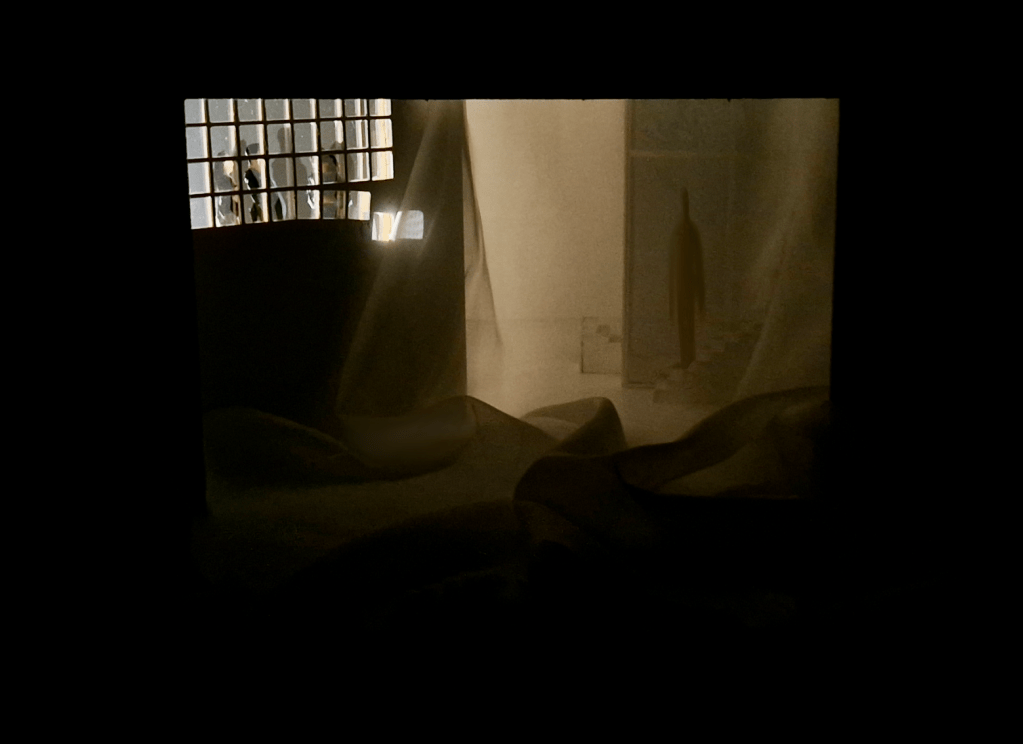
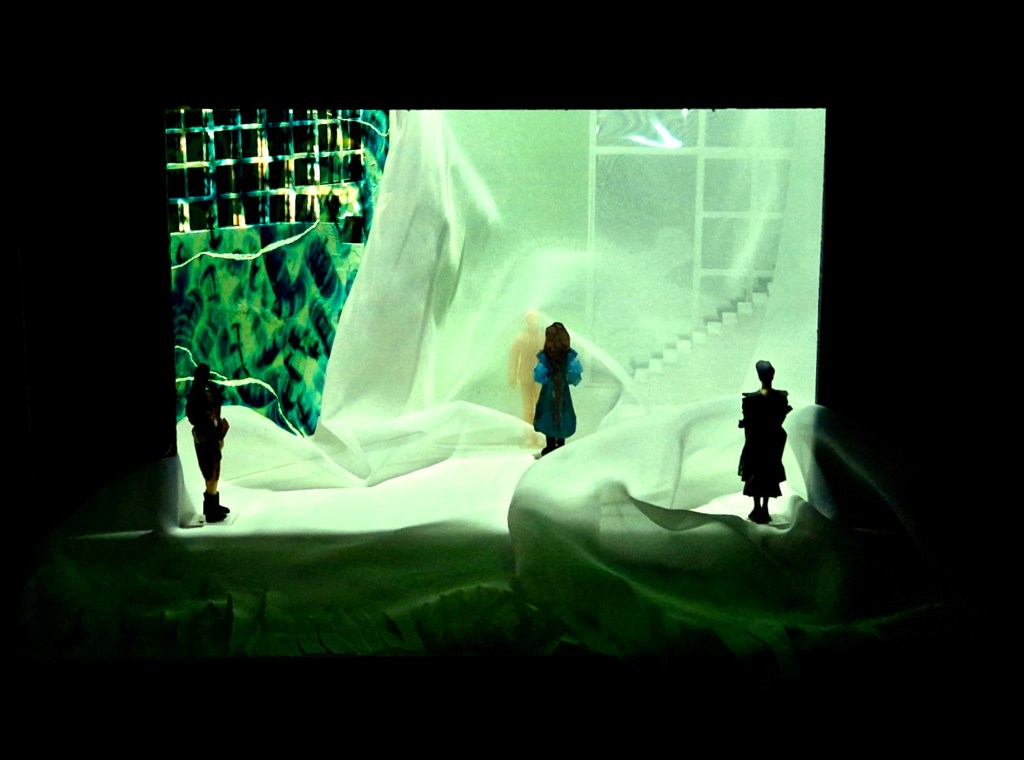
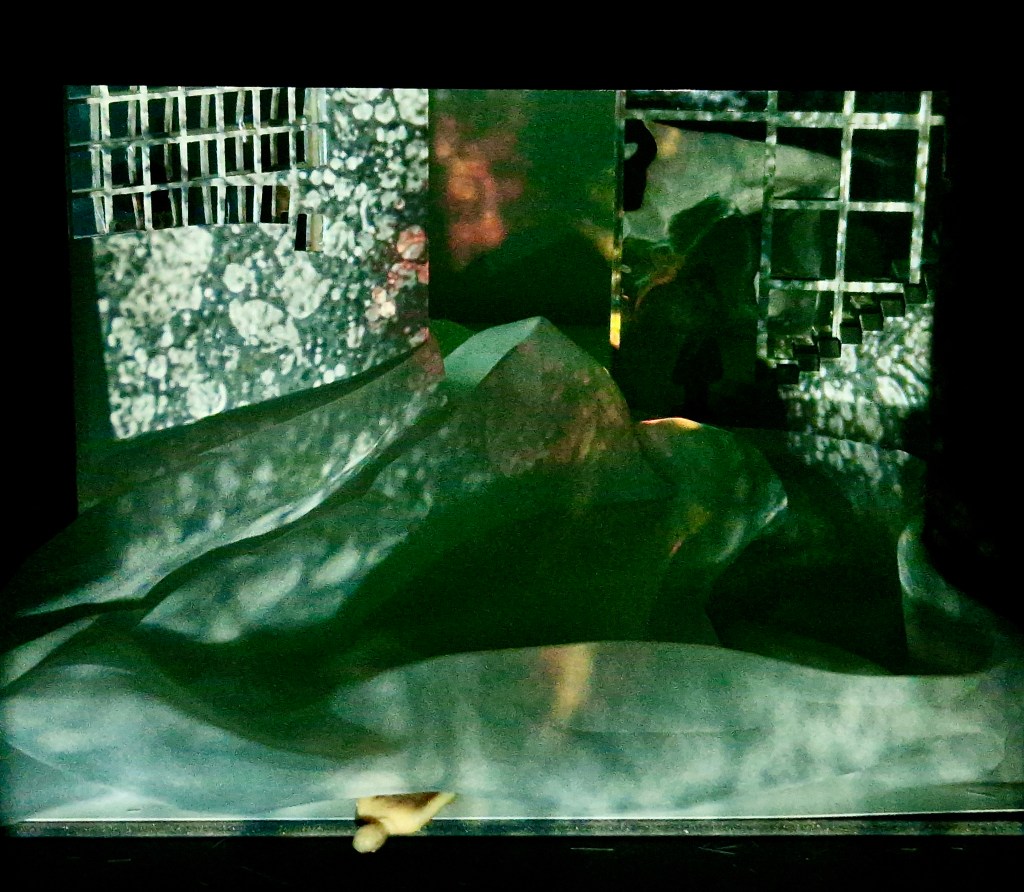
The stage environment is a visceral blend of industrial aesthetics and psychological horror. Factory walls, cold stairwells, and windows serve as the backdrop for a world where reality and nightmare merge. The stage is initially cloaked in a semi-transparent projection fabric that eventually collapses, revealing the brutal truth beneath the surface. This effect, enhanced by dynamic video projections and light, captures the core themes of disgust, human longing, and physical decay that permeate the narrative.
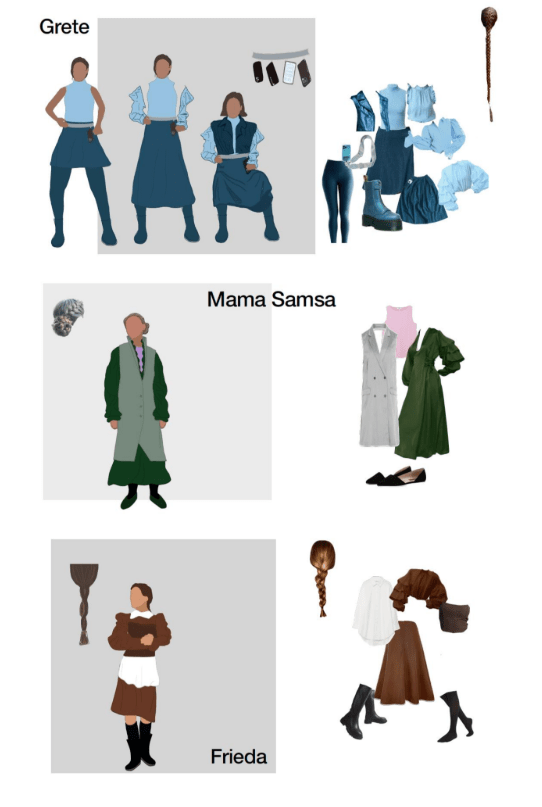
The costume design charts Grete’s evolution from a girl into an emancipated woman, only to have her eventually fall prey to the same relentless hustle culture. Her costume serves as a visual timeline of this development, with new elements added to reflect each stage of her growth. The design also serves to expose the intersectionality of class, gender, and age within the play’s working-class family. This is made explicit through the hair of all three women, styled in braided variations that function as a powerful symbol. The hair not only represents their femininity and strength but also their distinct social standings and the subtle power dynamics at play within the family.
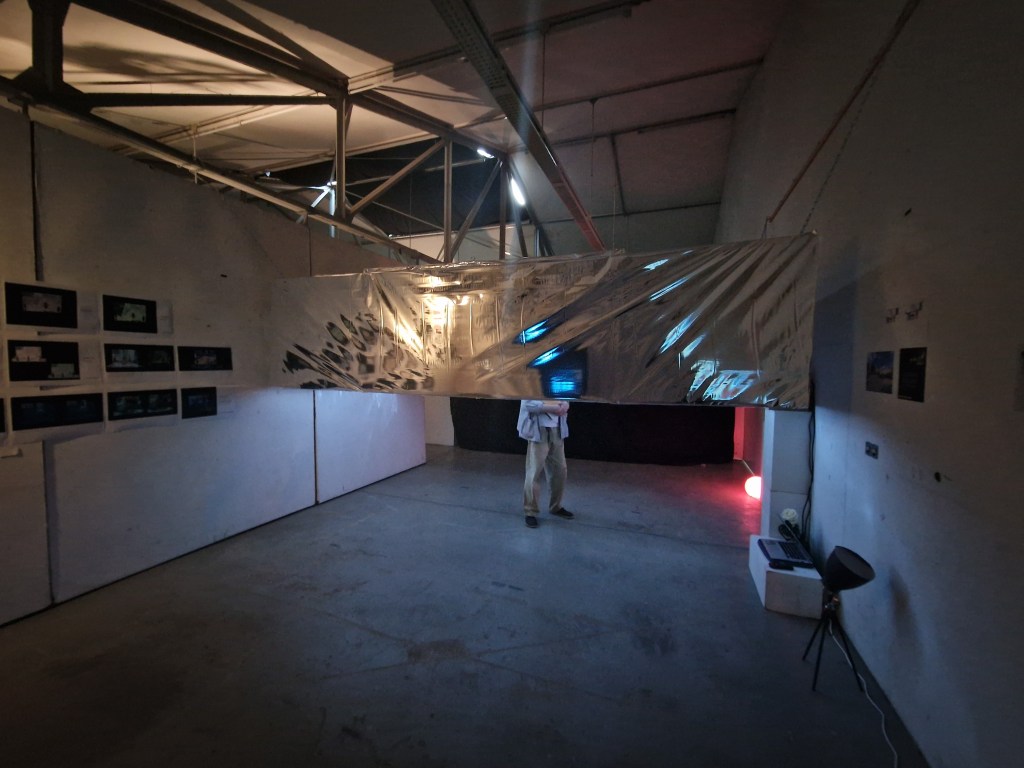
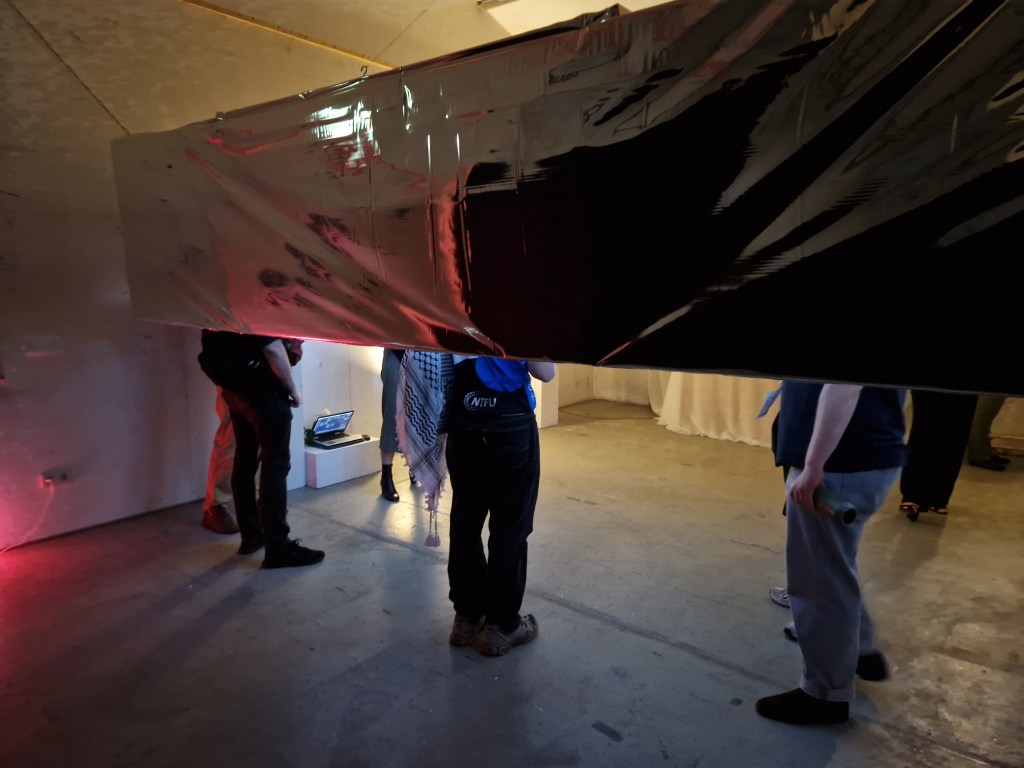
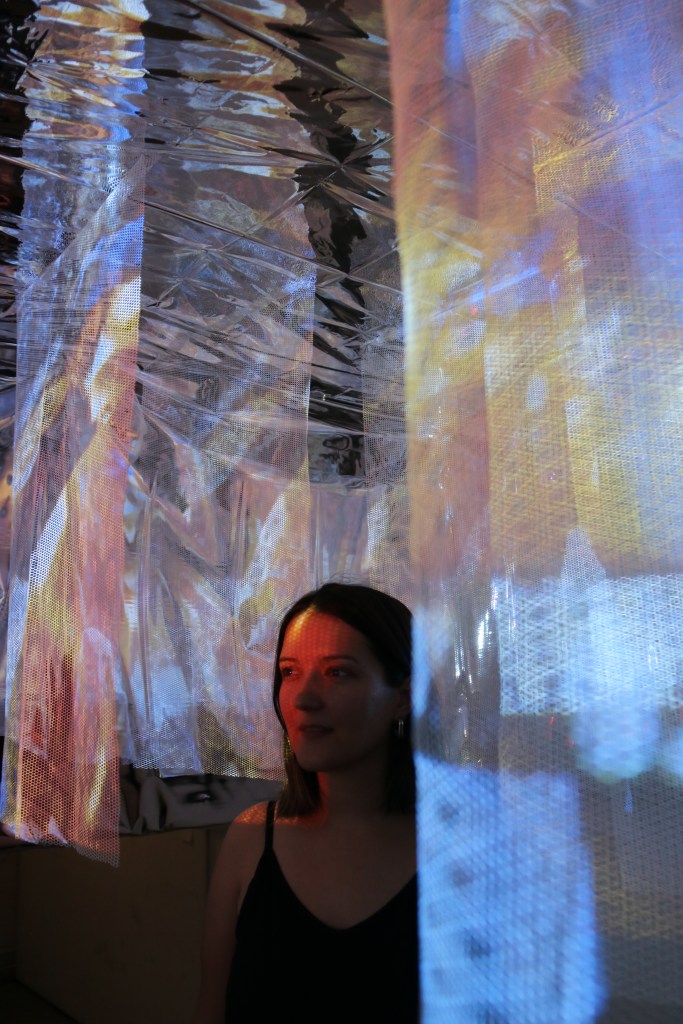
Part of this master’s thesis concept is an interactive installation designed for the public space. Its purpose is to engage pedestrians and theater visitors, drawing them into a direct confrontation with the project’s central theme. The installation reveals how the seemingly relaxing act of „unwinding“ has been co-opted and instrumentalized as a tool for corporate productivity.
For my thesis, I developed and built a prototype of this installation, turning a static space into a thought-provoking experience. The piece seamingly invites participants to physically and mentally slow down, just to stress them to an extend where the facade of the initial call for wellness crumbles. The installation lures participants into a deceptive calm, seemingly inviting them to slow down. However, it gradually elevates their stress levels until the facade of „wellness“ crumbles, forcing them to confront the hidden costs of our relentless pursuit of efficiency. The piece challenges audiences to reimagine wellness not as a tool for productivity but as an end in itself.
Supervisors Johanna Pfau and Ludger Jansen, Principal Prof. Kerstin Laube, MA Stage design and scenic space, fourth semester, TU Berlin

© NATALIE GIANNOPOULOS 2025 ALL RIGHTS RESERVED
